Article Snapshot
| Difficulty | Beginner |
|---|---|
| Reading time | About 5 minutes |
| Prerequisites | Custodial vs. Self-Custody Wallets is recommended. |
| What you’ll learn | What to share to receive crypto, what to keep secret, and what you need to recover wallet access. |
Wallets, Ownership & Transactions Learning Path
- Custodial vs. Self-Custody Wallets
- ► Addresses, Private Keys & Recovery Phrases — You are here
- Hot vs. Cold Wallets
- Crypto Networks & Compatibility
- How Crypto Transactions Work
- Transaction Fees
- Reading a Blockchain Explorer
- Pending, Confirmed & Failed Transactions
- Sending & Receiving Crypto Safely
- Wallet Connections, Signatures & Token Approvals
In This Guide, You’ll Learn
- Which details to share when someone sends you crypto.
- How a private key authorizes a transfer and why a recovery phrase can affect several accounts.
- How an app password or PIN differs from a wallet backup.
- What to check now so you know what you’ll need if you lose your device.
Introduction
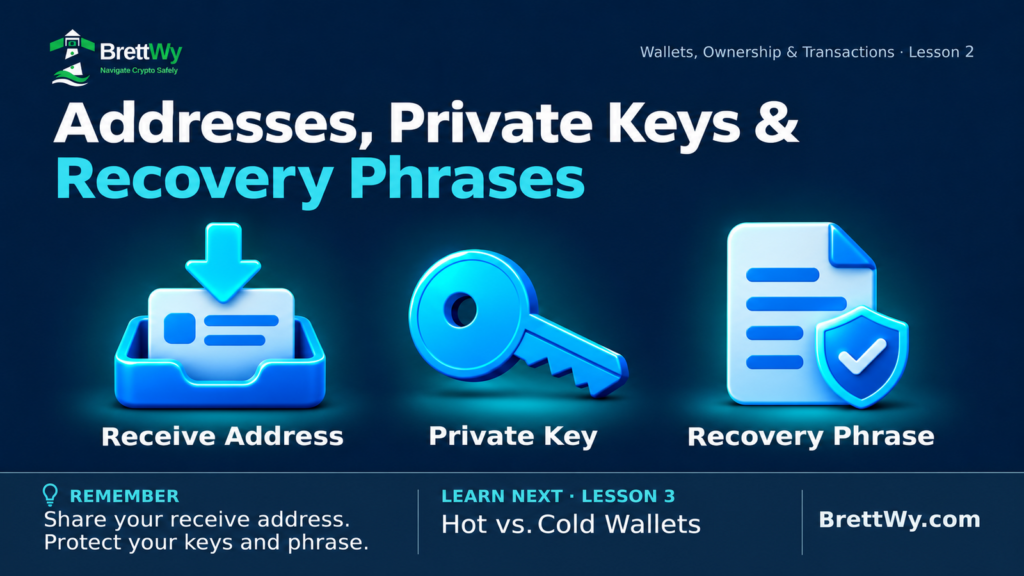
Share your receive address with the person sending you crypto. Keep your private key and recovery phrase secret. If you lose access to your wallet, what you need to recover it depends on how you set it up.
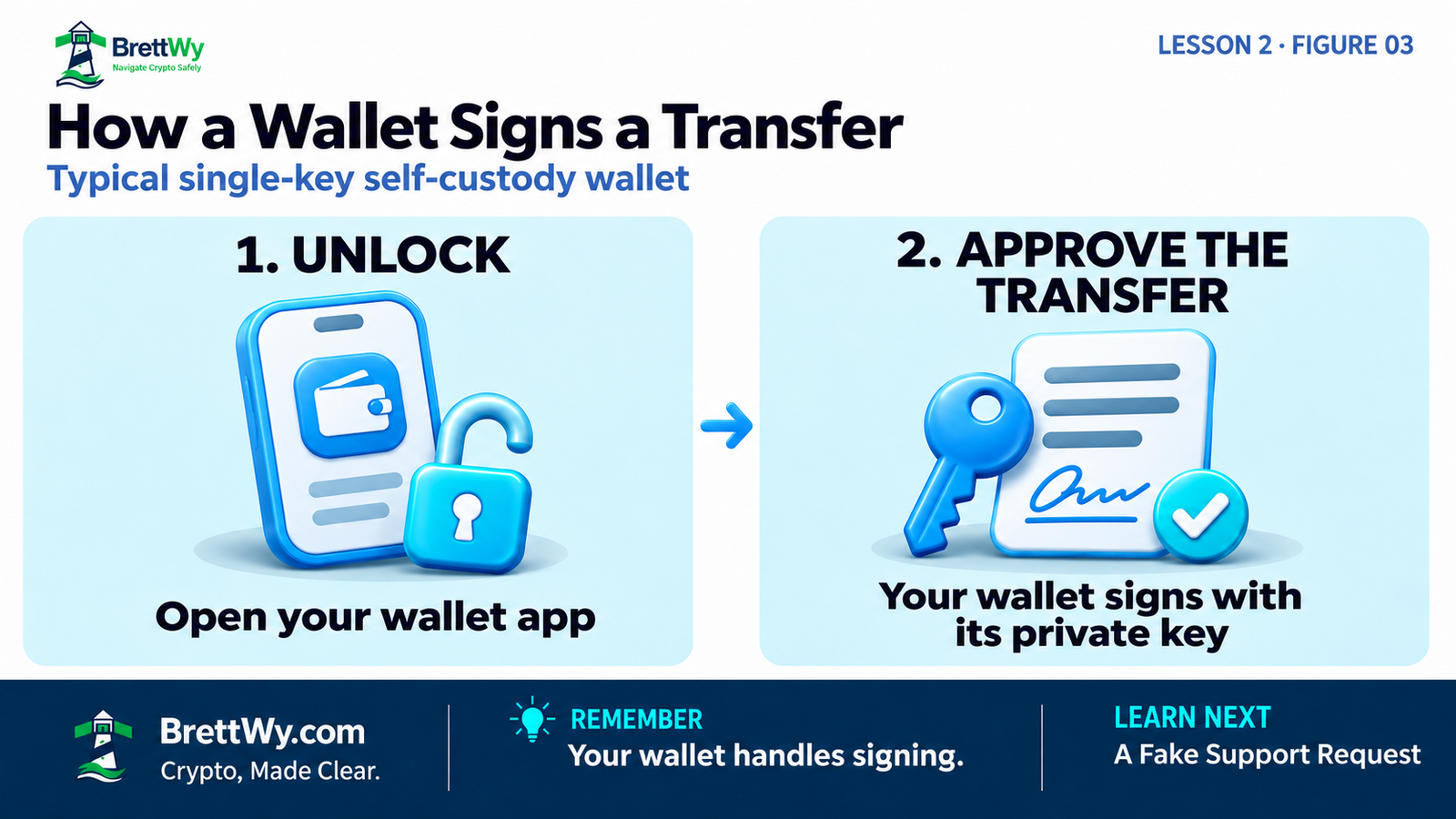
Lesson 1 separated logging in from authorizing a transfer. In a typical single-key self-custody wallet, unlocking the app gives you access to it. When you approve a transfer, the wallet uses your private key to sign it.
The BrettWy Wallet Decisions Framework
Use these three questions when someone asks for wallet information or when you’re checking how you would regain access.
- Share · What does the sender need to deliver the payment?
- Protect · Could this information let someone sign or restore wallet access?
- Recover · What does my specific wallet need to restore access?
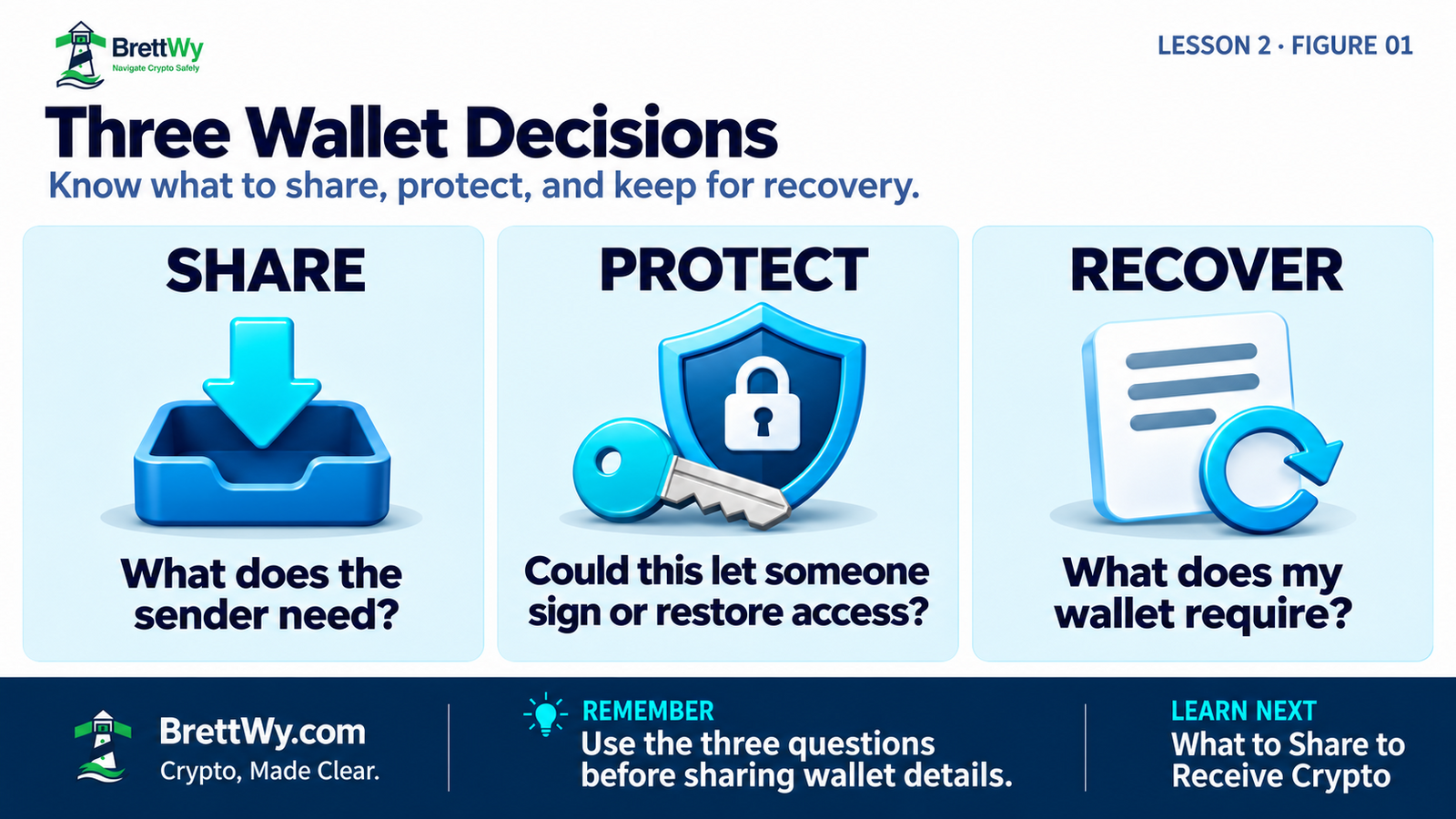
Table of Contents
What can I share?
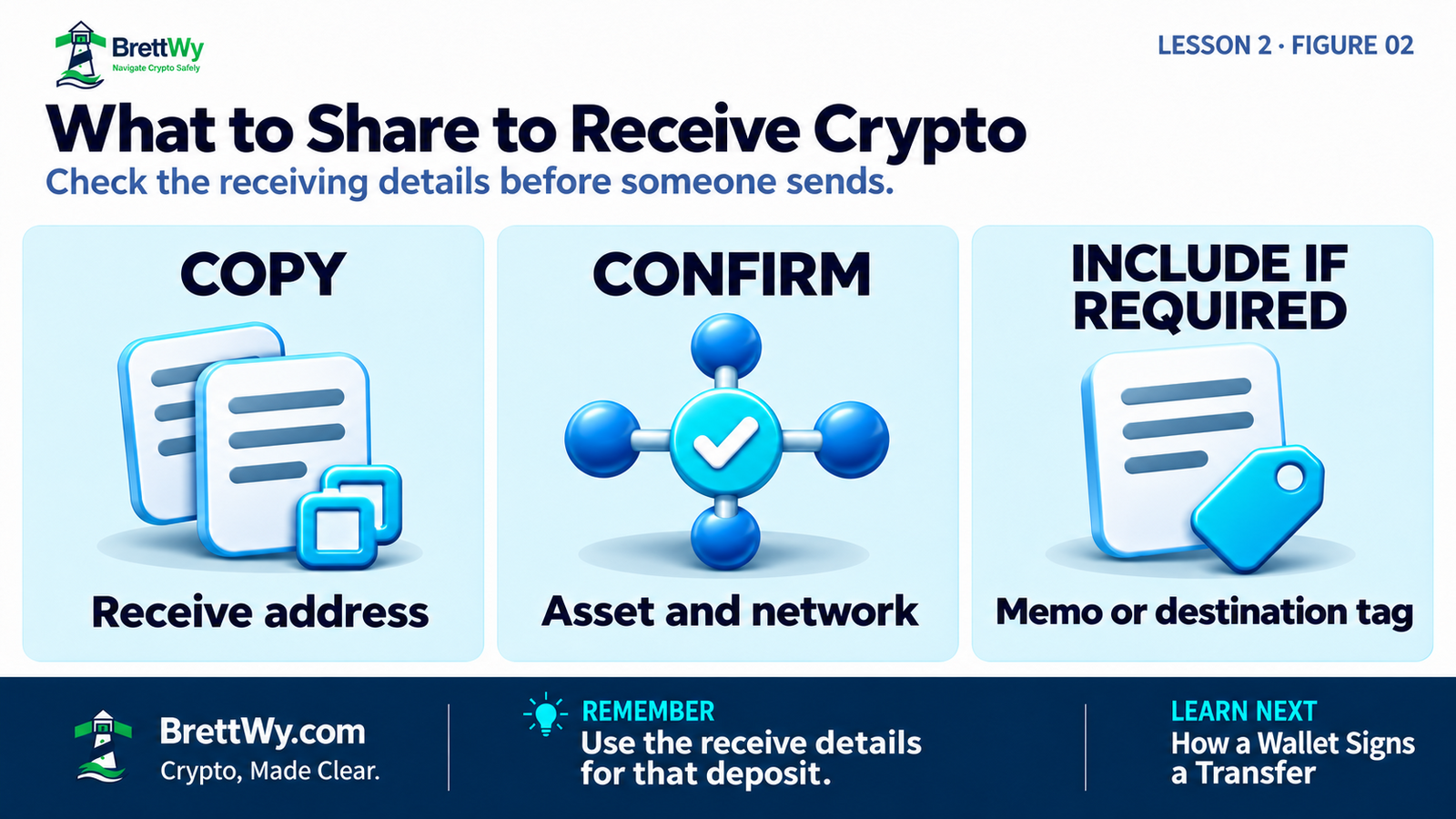
Your receive address tells the sender where to send the crypto. Copy it from the receiving wallet or platform for the asset and network you intend to use. Share it with the intended sender and confirm that they’re using the same asset and network.
For example, if your receiving screen shows USDC on a particular network, ask the sender to confirm that same network before they send. If the screen shows a required memo or tag, send it with the address.
Some receiving platforms also give you a memo or destination tag. If the receiving screen requires one, include it along with the address so the platform can identify the deposit. Follow the requirements shown for that specific deposit.
What must I keep secret?
A private key is secret information your wallet can use to sign a transaction. In a typical single-key account, someone who obtains the private key can sign for that account. Your wallet handles signing when you approve a transfer, so you can make a payment without seeing or typing the key.
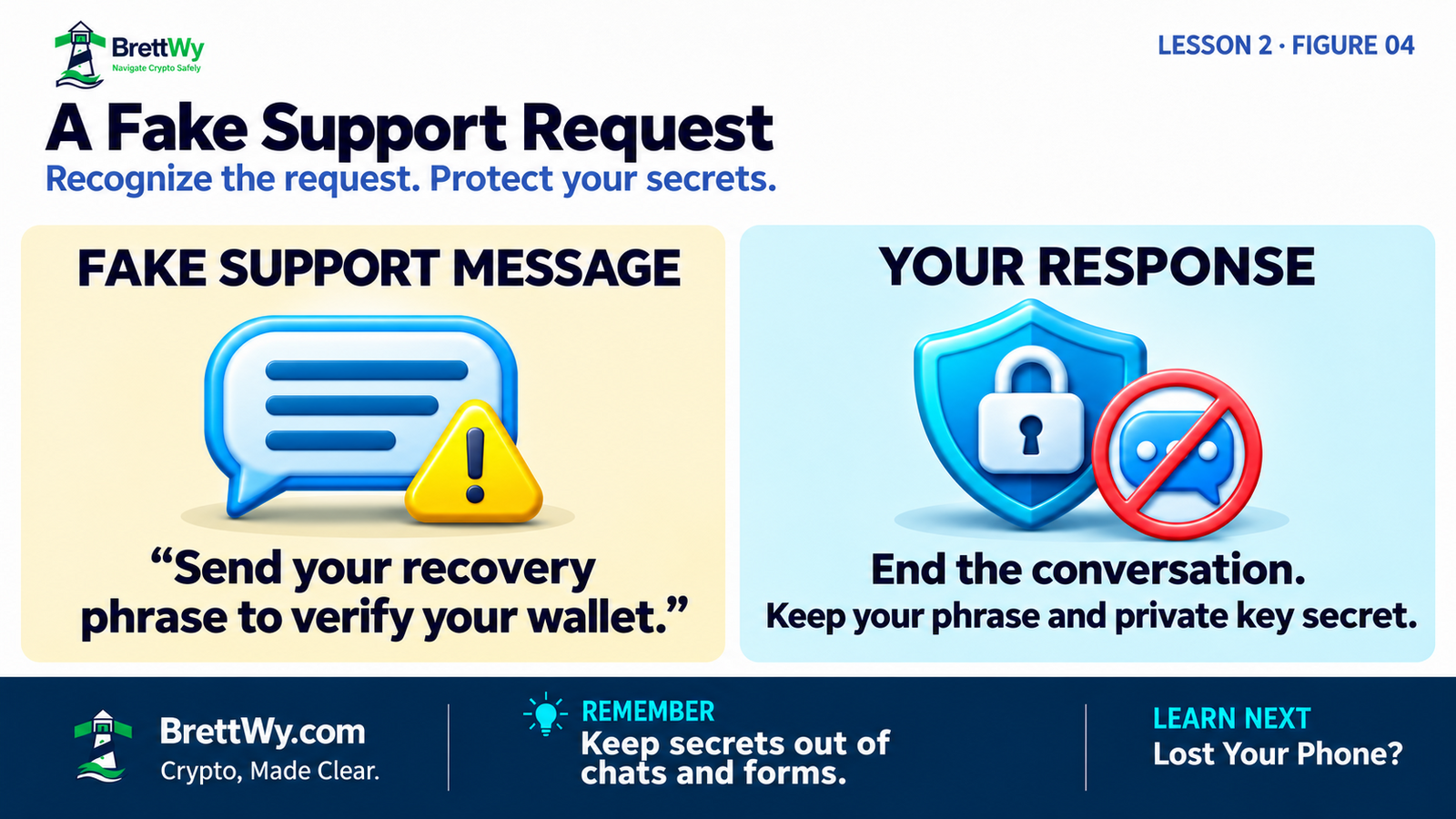
A recovery phrase, sometimes called a seed phrase, is an ordered list of words used by many self-custody wallets to recreate the keys they generated. In a compatible setup, one phrase can restore access to several accounts derived from it. That makes the phrase especially sensitive.
| Detail | What it does | How to handle it |
|---|---|---|
| Receive address | Gives a sender a destination | Share with the intended sender |
| Private key | Signs for its associated account in a typical single-key setup | Keep secret |
| Recovery phrase | Restores keys derived from that phrase when the recovery method is compatible and any required passphrase is supplied | Keep secret and protect the backup |
| App password or PIN | Unlocks the app or device in the setup described here | Keep secret and check your wallet’s separate recovery requirements |
What do I need to recover access?
Imagine your phone is lost and you remember the PIN you used to unlock your wallet. In a traditional phrase-based setup, that PIN unlocked the app on the old phone. To restore access on a replacement device, you generally need the original recovery words in the correct order and a recovery method that supports that backup format. The backup restores access to the wallet’s keys so you can use the accounts again.
Check your setup
- Did you add a recovery passphrase? In setups that use one, such as a BIP-39 passphrase wallet, you need the exact passphrase with the backup. A different passphrase can open a different wallet. Your app password or PIN serves a separate purpose.
- Did you import another account? In a standard MetaMask phrase restore, an account imported using a separate private key or recovery phrase may need its original recovery method. Check which accounts your main backup covers.
- Does your wallet use a different backup method? Follow that wallet’s documented recovery process. If you use a custodial platform, its account recovery process governs how you regain access to your login. Lesson 1 on wallet custody
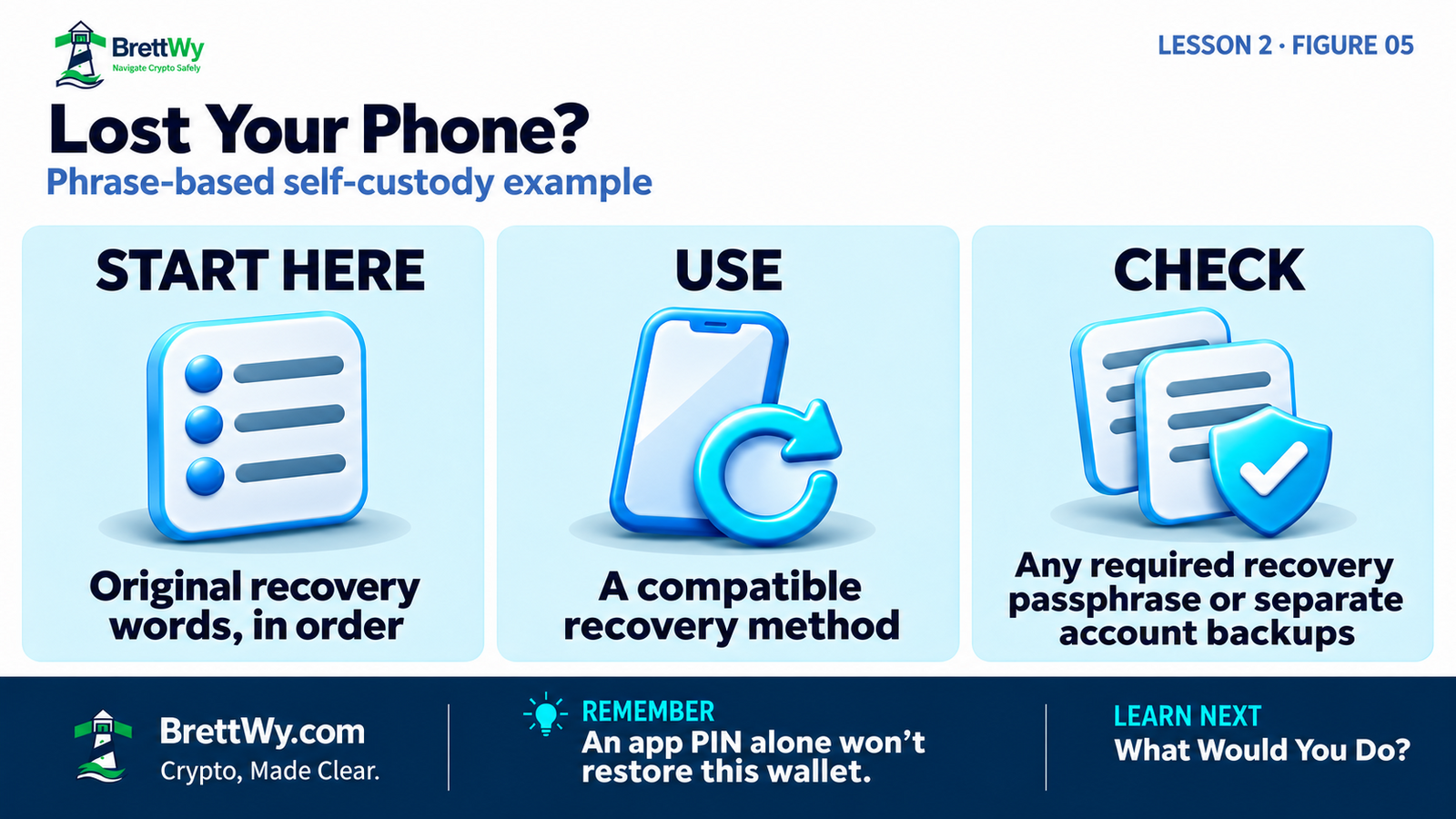
While you still have access, find your wallet’s official recovery instructions and check which backup method applies to you. You can do that without entering your recovery words or wiping your current device.
Key Takeaways
- Share receive details with the intended sender.
- Keep signing and recovery secrets private.
- Check what your wallet requires for recovery.
Frequently Asked Questions
Can someone spend my crypto if they know my receive address?
Knowing a receive address alone does not let someone sign a transfer from it. On public networks such as Bitcoin, they may be able to see activity associated with the address.
Can I use my recovery phrase with any wallet?
Check that the wallet supports your backup format and the account type you’re restoring. If your setup uses a recovery passphrase, you’ll also need the exact passphrase.
Test Your Knowledge
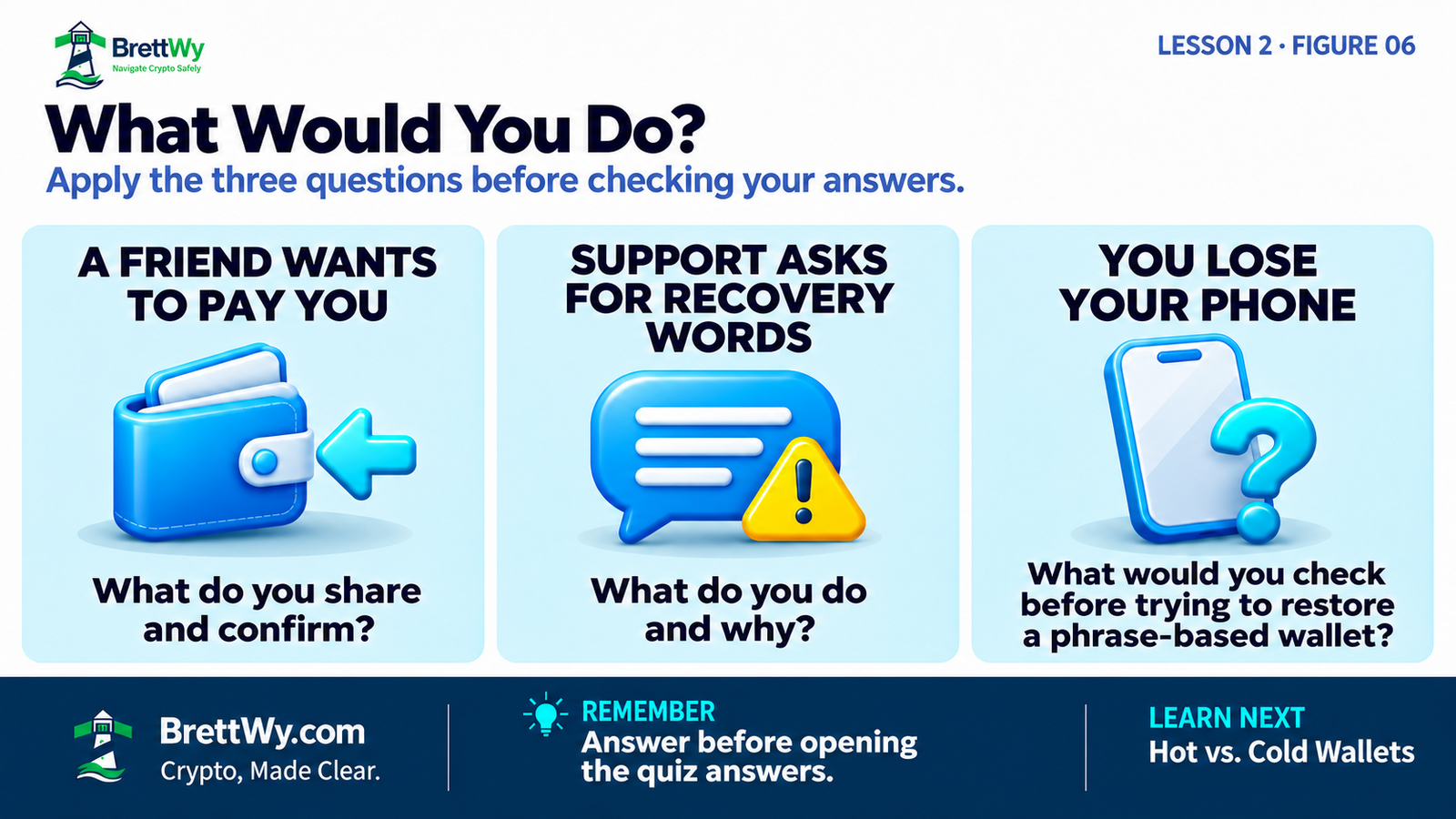
Try answering all three questions before reading the answer key.
- A friend wants to send you crypto. What do you share and what do you confirm?
- Someone claiming to be support asks for your recovery words. What do you do and why?
- You lose your phone and remember your wallet PIN. Can you restore access with the PIN alone? What do you check?
Check Your Answers
- Share the receive address, confirm the asset and network, and include a memo or tag if required.
- Refuse. The phrase can give someone access to the accounts derived from it. Keep the private key secret too, since it can sign for its associated account in a typical single-key setup.
- In a traditional phrase-based setup, the PIN alone won’t restore access. Check for the original backup, a compatible recovery method, any required recovery passphrase, and any separate recovery materials for imported accounts.
Official and Educational Resources
- Coinbase Help — Steps to receive crypto: Receive addresses, supported networks, and when a memo or tag is required.
- Bitcoin.org — Protect your privacy: What sharing a Bitcoin address can reveal.
- Ethereum.org — Ethereum accounts: How private keys sign transactions for externally owned accounts.
- BIP-39 — Mnemonic code for generating deterministic keys: How recovery words and an optional passphrase produce a wallet seed.
- Electrum — Seed Version System: An example of a wallet-specific recovery phrase format.
- Trezor — Passphrase wallet troubleshooting: Why a passphrase-protected wallet requires the exact passphrase.
- MetaMask — Secure your recovery phrase and password: How recovery phrases, passwords, and private keys differ.
- MetaMask — Connect or import an existing wallet: How separately imported accounts are handled during recovery.
Final Thoughts
Share receive details with the intended sender. Protect the secrets that let someone sign or restore access. Check what your wallet needs before you lose the device you use today.
Continue Your Crypto Education
LEARN NEXTLesson 3: Hot vs. Cold Wallets
See how different wallet setups handle signing and what that means for everyday use and storage.
About This Content
BrettWy creates beginner-friendly cryptocurrency education with a focus on clear explanations, practical security, and understanding risk. Content is developed with AI assistance, and relevant sources are linked so readers can explore the underlying information.
Crypto products, services, and technical guidance can change. Check current information with the original source before taking action.
Found an error or outdated information? Email info@brettwy.com with the article URL and the detail you believe needs attention. Never include passwords, private keys, or recovery phrases.
Educational and Risk Disclaimer
BrettWy provides this article for general educational and informational purposes only. It does not constitute financial, investment, legal, tax, accounting, cybersecurity, or other professional advice.
Cryptocurrency wallets, private keys, recovery phrases, self-custody, third-party custodians, applications, devices, and blockchain transactions involve significant risks, including credential theft, malicious software, fraudulent approvals, scams, provider failure, irreversible mistakes, and permanent financial loss.
No wallet, device, custodian, application, security method, or recovery process can eliminate every risk or guarantee the safety of digital assets. Verify current information through official sources and consult qualified professionals when appropriate.